Sam Kos, Co-Founder Of The Daily Aus, Finally Escapes The News
We took Internet reception away from a news junkie and he kind of loved it.
If you're even a remotely switched-on consumer of media in this country, you've probably heard of The Daily Aus. Started by two childhood friends still in their mid-20s as a way of parsing the news for mates too busy or too disengaged to make sense of the headlines, The Daily Aus has become something of a phenomenon in the past year, exploding in popularity, attracting investors and expanding into new avenues like podcasts and video. It's become such a big deal that co-founders Sam and Zara took the plunge and quit their respective jobs in law and politics to pursue their dream full-time, which also means living a life that is basically always-on.
We recently partnered with The Daily Aus when we realised the natural parallels between people too busy to read the news and those too busy to take time out in nature. Well, we like to say that.
In actuality, it was Sam, who headed up to one of our newest hideouts that came up with the idea after spending his first 48 hours without a mobile phone in a very long time. We caught up with the newshound to ask him about how he deals with the sort of anxiety that gives us anxiety just thinking about it and what he learned after spending some quality time far away from headlines.
Give us an insight into how hectic your day is at TDA. How many headlines do you ingest before breakfast?
My day starts well before the sun come up - especially in winter. The first thing we have to do is make sure that the podcast (6am) and newsletter (7am) get out on time. But, before all of the content and the headlines and the screen time - the absolute first thing I do when I get out of bed is make a coffee. From there, it's all about making sure that we're on top of all the morning's headlines, and we're set up well for the day. Once that morning flow of content is wrapped up, it's into the running of the business, and we don't really stop until about 7pm. Even then if something happens after that time were right on to it, whether it's a late night tweet from a health department, or some breaking news from overseas - it's really important that we are responsive, no matter what the time is.
How many different news sites do you reckon you read a day?
I usually browse perhaps 20 or 30 news sites and spend literally all day on Twitter - I am never not keeping an eye on what’s trending, breaking or being debated. Twitter is where we find that a lot of news breaks first, and it's often the way that we keep our ear to the ground (especially when we are working from home).
When you run at a news platform that primarily uses Instagram as a media channel, can you ever really switch off?
I don't think it's realistic to say that we have an off switch. The saving grace really is the fact that there's not just me and we have a fantastic team around us that, and, and it means that I can go for a walk, or spend time with friends and family and not have to think about the news not going out, if I don't see it.
What are the signs of news addiction and when did you diagnose yourself with it?
The key sign of news addiction: a need to know something has happened before it happens. It’s the necessity to make sure you know something before the rest of the world - a really cool example of that would be with the daily announcement of COVID numbers here in New South Wales. I can't help myself, but I’ll do whatever I can to find it out even 30 seconds before it's announced on television. It's a rush of knowledge and information, and preparing for what is about to come. We see our jobs as ‘news translators’, so we feel a big responsibility to get ahead of it. I think a really tangible way to tell I've got a news addiction is that I just really love hardcopy newspapers still - I try and get my hands on one as much as possible. I know that's not a very common thing for people my age to do, but I love the smell and feel of it, and it's my ultimate happy place on the weekend. Even when I feel like I need a break from work (which is in the news) I sit down with a coffee in the newspaper and read. I love reading the longer features - not necessarily the harder stuff but maybe the lifestyle sections or sport, or even just doing a crossword.
Interesting, it's a nice way to slow down! You come from a news family, right?
I come from a news and media family. My dad was a newspaper editor for a long time, through my childhood, and I have these really distinct memories of him asking my opinion as a six or seven year old on how the front page should look (I’m sure I didn’t have much editorial input, but he just wanted to involve me in the process). I vividly remember visiting him at work and feeling the rush of the newsroom. I knew from when I was very very young that I wanted to be a journalist - I think I was probably about five or six when I was telling people that I wanted to be a news reporter (that was my first iteration of my media dream). I've just known it's in my blood, and it's what I'm meant to be doing.
How do you unwind after a particularly heavy day? Do you have any strategies for coping, especially if it's been a big one?
After a particularly heavy day, the way that I switch off is by surrounding myself with my housemates - who are also my best mates. I really use them (with their permission) as a way to disconnect from technology and hear about what's going on in the world of other people. I think when you're running a news service like TDA, it's quite easy to feel caught up in the news as the most important thing. But everybody's got their own personal headlines, and their own personal news that is equally as important as what's making headlines on the internet, and it's really important that I keep tapped into what's happening in other people's worlds.
If I'm by myself, I'm a big walker. I do quite a bit of other intense exercise, but I find walking to be more mentally therapeutic than anything else. Putting headphones in and listening to music, not podcasts, allows me to really unwind and relax.
When was the last time you didn't have your phone on you? How did that make you feel?
The last time I didn't have my phone on me was at Kaia. I left it in my bag and didn't touch it for 24 hours. It made me feel a really overpowering sense of FOMO - that the world was progressing without me. It was equally as important to take my watch off because I realised that I frame my day through news and through content. As it started to get dark, I started to instinctively feel like I needed to catch up on the day and recap the news of the day, or the stock market’s movements. That shocked me - that I actually associate times of the day with a need to check in with technology.
You mentioned your stay at Kaia. Tell us about it: what did you do, and more importantly, what didn't you do?
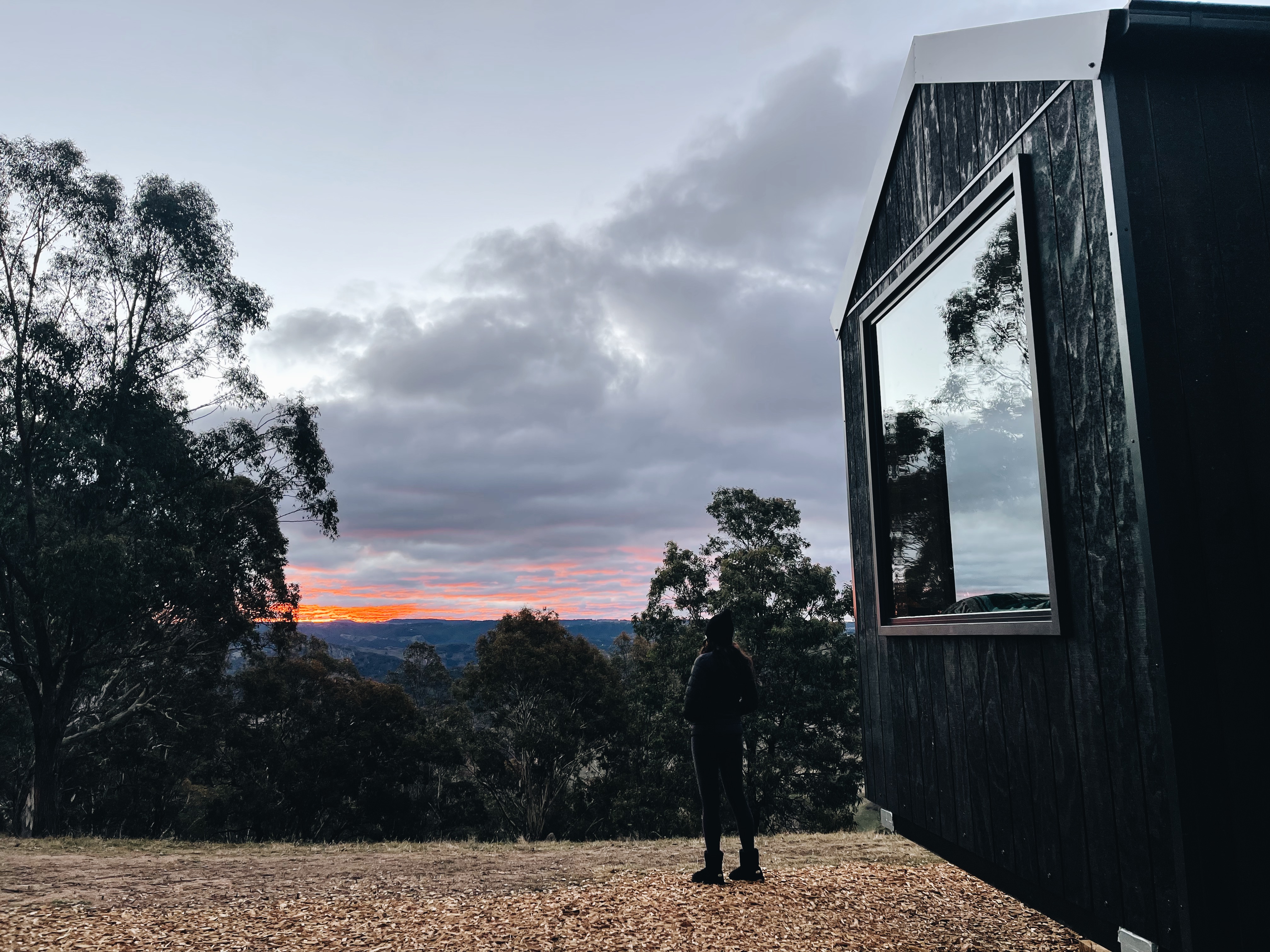
I spent a few days at Kaia, one of the new cabins in the Megalong Valley. It was one of the most beautiful and nourishing experiences I've had in a long time. I went with my girlfriend, Montanna, who is unbelievably loyal and patient when I am super busy and working at all hours of the day. It was really nice to go with her and connect as a couple, away from distractions and the pull of business. It was also special to break routine. Even the walking journey to get to Kaia which is about 20 minutes was just such a wonderful way to spend time together.
There are a few little tasks on offer in the cabin that I really connected with - that made me reflect on how automated our life is. One of those tasks was grinding coffee beans. I almost found an excuse to have another cup of coffee, just so I could grind more beans. I really really enjoyed the process of grinding the beans and taking in the aromatic experience of that - it made the coffee so much more worthwhile. It made me reflect that sometimes I use coffee just as a caffeine hit, rather than actually experiencing and appreciating the drink and the smell, and how much I love it. I've always said that I'm a coffee lover - and I think grinding the beans (not electronically) took it to another level. The other thing was trying to tune a radio. I know I'm showing my age here, but I really struggled to get to the frequency of the station that I wanted, which I just thought was hilarious.
I feel like I had a similar experience to what a lot of people associate with a calming blanket or some sort of sensory deprivation - the simplicity of what my senses were allowed to experience, without feeling a sense of discomfort (in fact, the very opposite!).
It was really challenging to not feel like I had to keep moving. I'm not very good instinctively at being still. I am notorious in the office for my restless legs and having really frenetic body movements - so for me to be at the Unyoked cabin and not have tasks to complete was really interesting. I ended up having to stop myself from making tasks around the cabin, whether that be collecting firewood or reorganising our bags. For the first few hours, I just needed to be productive. It took me a little bit of time to really lean into why we were there, which was to actually enjoy the stillness.
Many of our cabins don't have loads of reception or Internet access. Did that make you nervous?
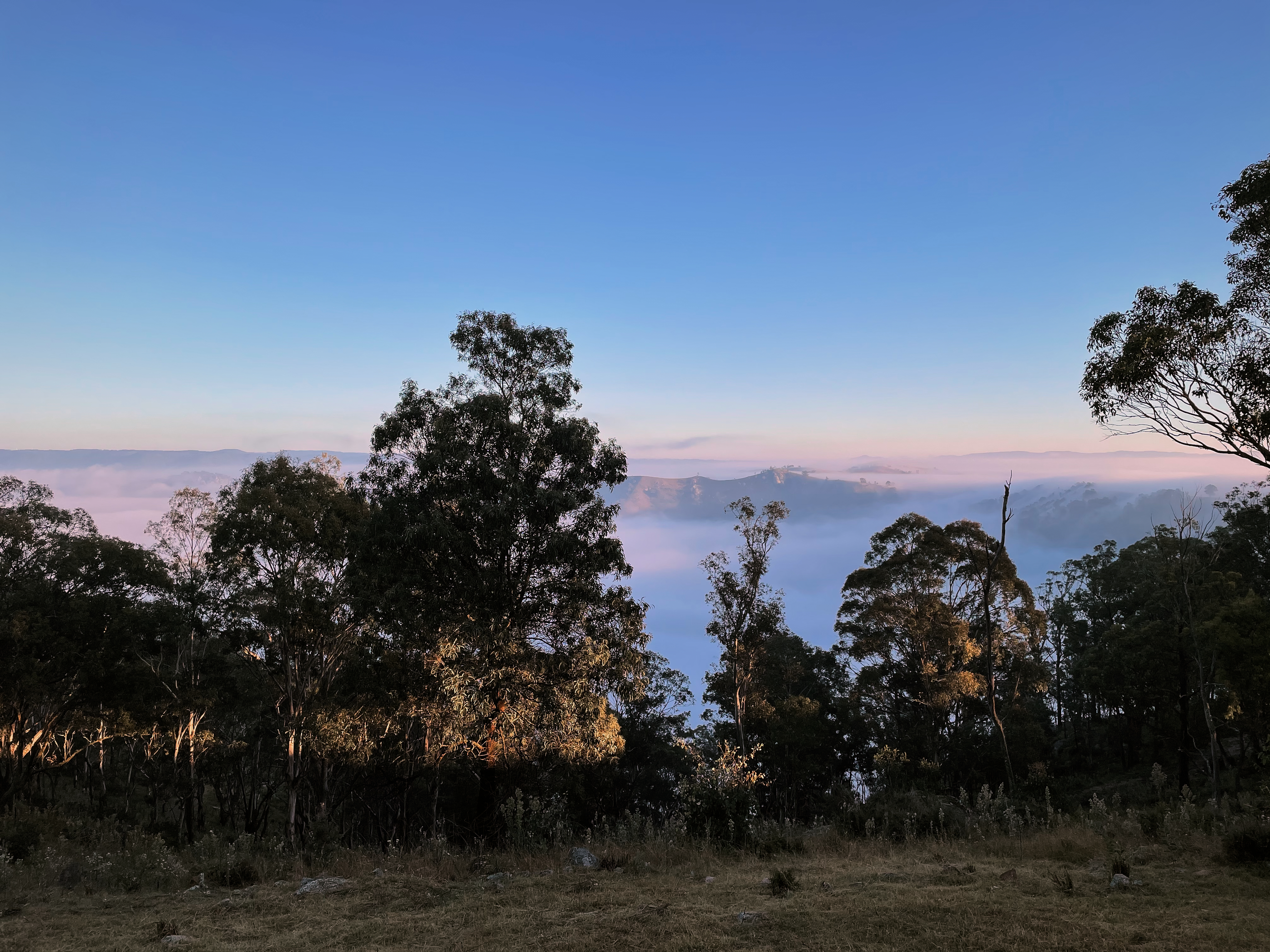
The sense of not having reception or Internet access was very similar to being on a plane for me. After the first few hours, I got a desire to play into that mentality - that the only way to get to the other side is to just sit through it and enjoy it (on a plane, that is often signified by the first sip of a G&T, but in the cabin, it was the first sip of ‘sleepy time’ tea. So, I think, after that initial adjustment, I actually wasn't nervous because of the lack of reception or internet access.
What was something you learned about yourself and the way you work after spending a few days off grid?
Something that I learned about myself and the way I work after spending a few days off grid is how much I physically embody stress and hard work through soreness in my muscles, and how good my body felt physically after even 24 hours of switching off. I think it's pretty universal to feel a lot better physically when you're on holidays than when you're working hard, but I definitely think there's more I can do to relax my muscles at the end of the day so I don't carry that tension and soreness. When I was in the cabin, I was often struck by how physically good I felt.
How did you feel after you came back? Was it straight back into it or did the effects linger for a few days?
The effects of the Unyoked cabin lingered for a few days, because I was recounting my experience to people around me, and every time I did that it kind of kept the flame alive. After that, it became really swept up in the pace of the week. But one thing that I've done to keep some of that magic is I've set a photo of the cabin and my girlfriend as my iPhone screensaver. So when I'm on my phone (which, based on my average screen time data is above 10 hours a day), I'm still thinking about that weekend - remembering the pace, the time with Montanna, and the grinding of coffee beans.