Ruby Gill: A Lifetime In Flight
Our Writer's Resident on her avian obsession
Feted singer-songwriter and all-round epic sentence-wrangler, Ruby Gill, rocketed straight to the top of our judges finalist list when she entered our Writer's Residency earlier this year. Selected as one of our four Residents, she's spent over 300 days in lockdown in Victoria and is understandably stinging to get out to our locations for some creative nature sessions.
Born in South Africa, Ruby has a unique experience of being surrounded by wilderness that informs her work. She's also big into birds; her writing often references those in her local area and she regularly catalogues the species she comes across in her travels. We got Ruby in the blower to ask how the former 'A-type' personality is looking forward to stepping away from overhead lights and big screens and getting back to nature.
We've noticed you've got a particular affinity for all things aviary. How did this bird obsession come about?
Growing up, I was always moving around – to see my father, to connect with land and people outside my small-city echo chamber, to play music. As I travelled, I began to notice the birds changing around me. Halfway between Johannesburg and Kwa-Zulu Natal the black-shouldered kites suddenly became jackal buzzards. Moving south towards Cape Town, the sunbirds were joined by sugarbirds. As I traversed their overlapping territories, they became a sort of map for my life.
Each time I write down a new species I am capturing its entire surrounding landscape, the moment I met it in and what the world left like at the time. I have grown increasingly attached to the neighbourhood of birds around us – to their song, their behaviour, their mere existence, and the one long extended metaphor they present. On a life spent connecting with species other than our own, Potawatomi botanist Robin Wall Kimmerer says that “we don’t have to figure out everything by ourselves: there are intelligences other than our own, teachers all around us. Imagine how much less lonely the world would be.”
You're a renowned singer-songwriter, but this may be the first time many of your audience has read your prose. How does your writing process differ when it comes to lyrics as opposed to work like this?
I think it’s just a matter of headspace. They both come from the same pit inside me, but while I can lie upside down in bed and mumble out a song at midnight, I need a desk and a black pen and an early morning to write on paper. I also don’t tend to edit as much in song. There is something more visceral that happens when we sing – and a deeper respect for the moment we first sang it. With more silent writing, there is space to reconsider, to go back, to let fester.
Switching ‘off’ from a technological perspective is the only way I can find enough silence in my head to switch on to the senses and sentences actually worth being alive for.
Our judges were obsessed with your magpie piece. Can you give us a bit of background around the circumstances (and if said magpie is still tormenting you?)
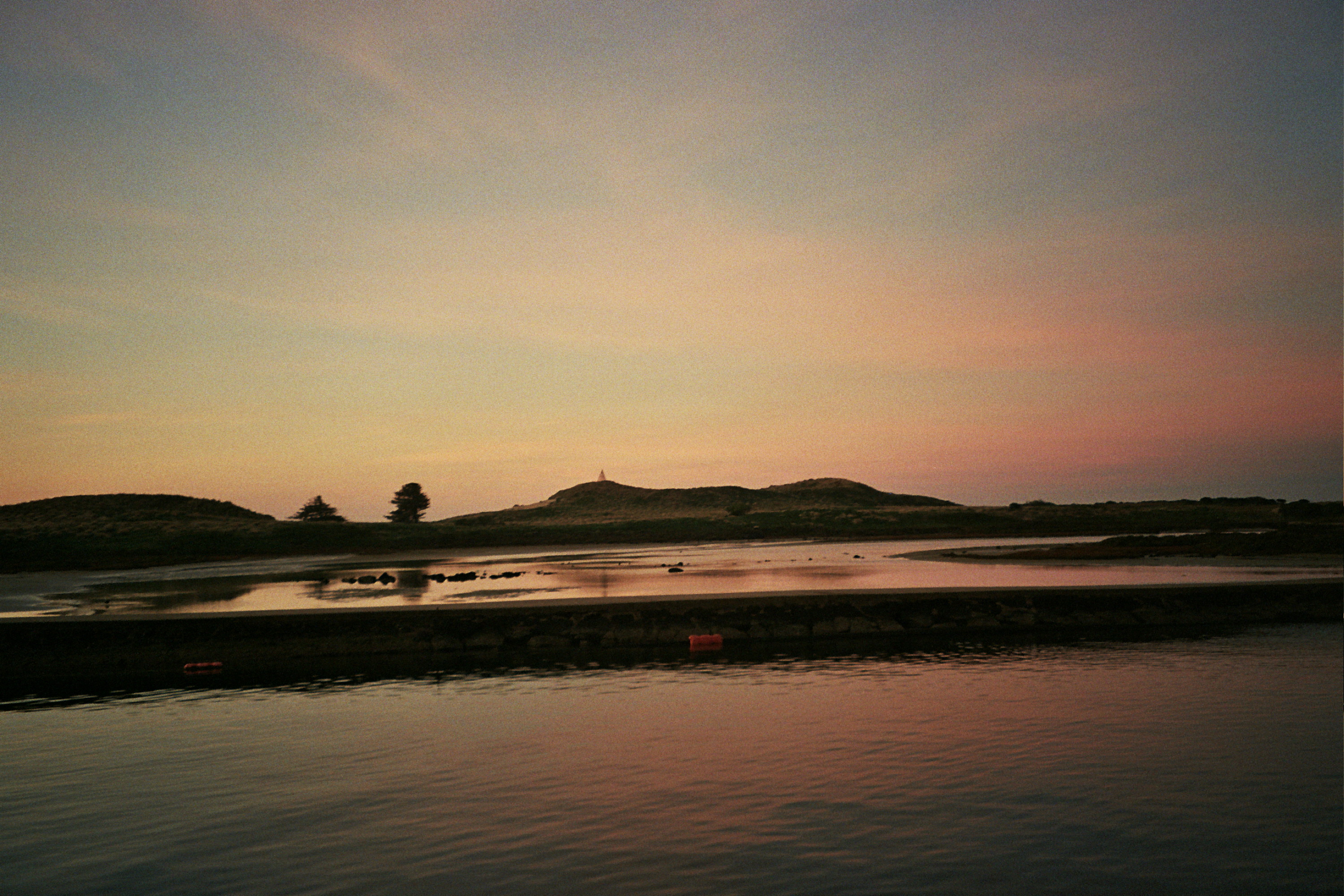
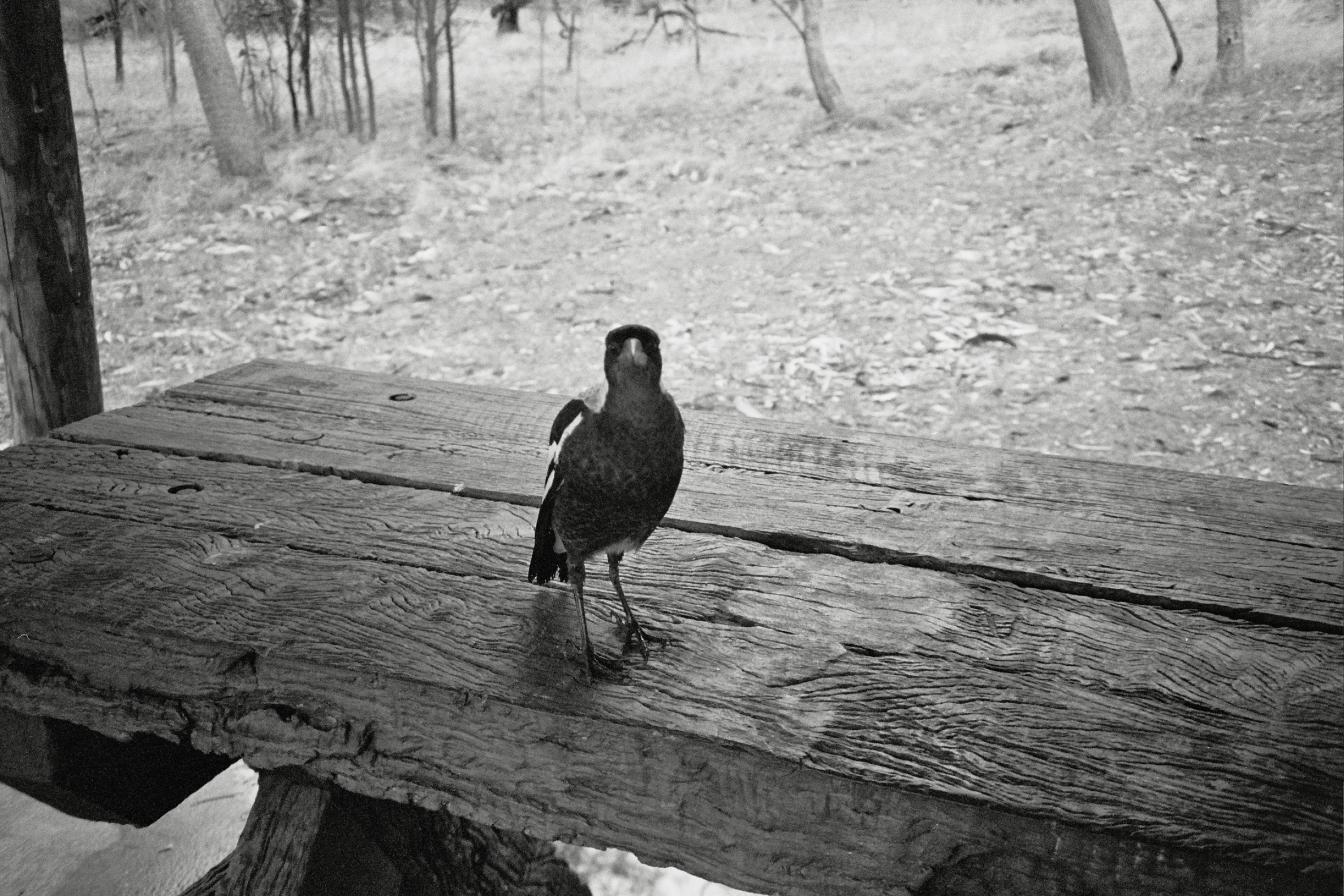
I was living locked down on Gunditjmara country during the first year of the pandemic, stuck far away from my family and under less-than-ideal domestic circumstances. Eventually, both my ‘home’ and head became relatively unsafe spaces to live in, and I began taking refuge in the forests nearby. One day a young magpie came right up to where I was sitting and started shouting at me – like really shouting, definitely at me. He climbed onto the table, looked me straight in the eye and had a whole earnest conversation, as if I would answer back. I have never felt so seen as in that moment, and in turn have never seen the earth so clearly. I began returning to that spot in the forest and we repeated this dance – him drowning out my fears and loneliness with his talking and me receiving the gift of connecting with something deeper in this land. I managed to get a photo once, when he was looking directly at me.
You're one of our four Residents who will be spending a lot of time in our locations when we're all allowed back out again. What will you be working on? Do you have a collection or body of work in mind or are you going to leave it to the trees to decide?
A bit of both. There have been four things swirling inside me – a work of fiction, an avian-inspired anthology, a new album and a podcast. We will have to see which finds its feet first.
In your line of work, do you get much time to get out into nature and switch off? Do you find it beneficial when you do?
My time in nature unfortunately remains mutually exclusive from my dayjob as a copywriter. That is all brick rooms and big screens. But I try to subsist on the nature time around that. I watch the earth turn towards the sun each morning, press my palm to at least one tree per day, and go birdwatching each weekend – in lockdown this comprises checking on the doves in my local park, but in bigger times I venture out to wilder places. Switching ‘off’ from a technological perspective is the only way I can find enough silence in my head to switch on to the senses and sentences actually worth being alive for.
Being a working musician (in addition to holding down a dayjob) can be incredibly stressful. How do you decompress at the end of a busy few days? Are you someone that's always on or knows how to step back and take moments for themselves?
Living alone this year is the first time I have ever achieved this semblance of balance you hint at. I used to be the A-type personality of my current self’s nightmares, always spiralling in some direction. An internal reckoning at the end of last year’s universal burn-out (sidenote: how are we still going?) showed me that I wasn’t listening to my body, and I was “giving all my carrots away,” as my friend Angie likes to say. I am now learning how to grow more for myself, but as with all vegetables, it takes time. Forced solitude has taught me to just ‘be’ in the in between bits and I’m becoming an expert at staring out the window, writing down bird species, underlining every surprising sentence in every book I can get my brain into and letting myself watch medical dramas as and when needed.
What I miss most is the wildness, the endless mammals and the diversity of terrain. You can travel only 10 minutes and move from acacia savannah to 1km-high waterfalls, from fynbos coast to endless sand desert.
You were born in South Africa, one of the pinnacles of natural splendour and wildlife. Have you gone back there much? How does the Australian bush compare to the forest where you grew up?
I’ve only been back once in the past five years, apart from a brief trip for a funeral. I am missing it increasingly since the pandemic, with no real end in sight for when I’ll get to set foot on that soil again. What I miss most is the wildness, the endless mammals and the diversity of terrain. You can travel only 10 minutes and move from acacia savannah to 1km-high waterfalls, from fynbos coast to endless sand desert.
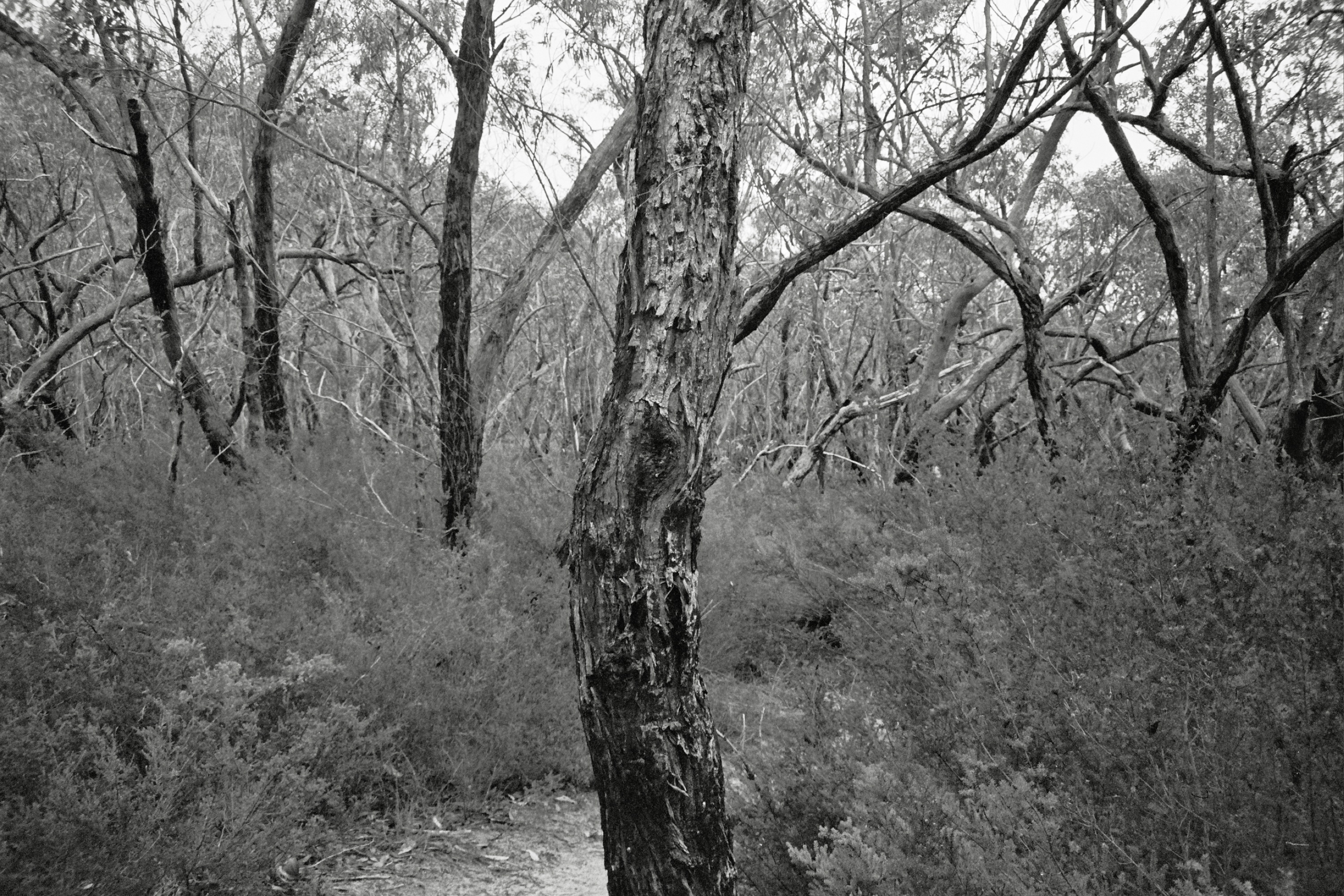
In the uMgungundlovu district where I grew up, we lived on a river surrounded by lush, wet forest. But 10min across the city there were giraffes feeding from the driest thorned trees you’ve ever seen. When I first landed in so-called Australia, I was taken aback by a sameness that felt so foreign to me. But it is this unchanging, ancient strength that I’ve come to respect and love. The land I was raised by and this one cannot compare – but that is why we should not compare them.
You use a few Indigenous terms in your work, like 'meerreeng' and ‘garuu’. How important is it to engage with the traditional languages of the land we occupy and how have you worked to build this into your practice?
I cannot speak for birds, nor plants nor rocks, but I can only assume that living things would rather answer to their true name – the name they were given by the people who first noticed them as neighbours and friends. The fact that most of the natural world has been categorised in English and Latin is simply colonisation in practice. Australia’s bird species were not discovered by white people – they were killed, measured and boxed by European invaders hell-bent on claiming their discovery – and yet the accepted default amongst society’s majority is still to use the names inscribed in the halls of the Royal Zoological Society. That’s just a hard no from me. Names hold so much meaning.
When I was in my early teens, our municipality changed all the street names in the CBD from those of white oppressors to apartheid liberation heroes. Longmarket St is now Langalibalele St. Such changes meant that the city no longer ‘belonged’ in any external, official capacity to a racist regime. Obviously, a name change isn’t reparations, but it’s a deep communal acknowledgement of truth. I do not in any capacity wish to claim Indigenous languages as my own, but I wish to acknowledge them as the true languages of this country, and I wish to get to know this country’s truth through them.
The Guardian runs a poll each year on the best Australian bird. What's your pick for this year and have you been let down before?
Look, this poll gives me deep internal choice stress. I feel that I am doing an entire ancient community of creatures a disservice by placing only one on the invisible pedestal of the internet. But for conversation’s sake I’m getting big Tawny Frogmouth/djinith-djinith/wannawal vibes this year.
My bird friends have counted 17 nests currently dotted around our 10km radius in Naarm and they’re all about to hatch forth with fluffy nightjar-owlet babies to keep us company. There is a mama sitting on her nest in the park across from my house, and I have visited her with obsessive love every morning as though she is my hotline to the outside world. Most of the time she is sleeping but sometimes she does a little jiggle when the sun hits her just right, just to prove that the earth goes on.
--
Ruby is one of our Writer's Residency winners and will be published in our upcoming Anthology later this year. She'll also have access to our locations for deep creative work over the next 6 months. Read more about the program - and meet all the finalists - here.