I’m a doctor and here’s how I use nature to switch off
Unyoked ambassador Dr Ali Coleman shares how she uses nature to beat burn out
I love my job. I genuinely love my job.
It's an immense privilege to be allowed into the lives of my patients and to be trusted to walk alongside them on their mental and physical health journey.
In saying that, as a hospital doctor working predominantly in mental health, we often cover 24-hour shifts and long working weeks. We’re exposed to trauma and risk like almost no other profession. To do this with empathy requires deliberate self-care and boundaries (and also an entire system change but that’s another story).
Nature is something I have always used as a prophylactic for burnout.
For those who aren’t medical geeks (like me), in healthcare we often refer to the phrase “it is better to have a strong fence at the top of the cliff, than an ambulance down in the valley”. The fence here symbolises a prophylactic response, using nature as a preventer of burnout rather than a treatment after the fact. Although I'm also guilty of having to use nature as the ambulance at the bottom of the cliff on occasion!
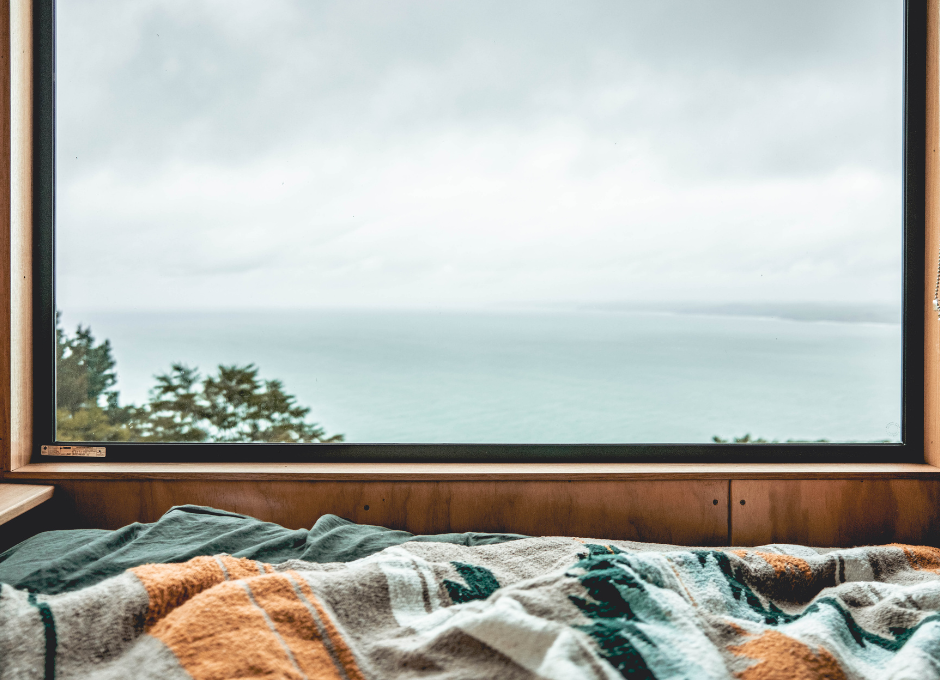
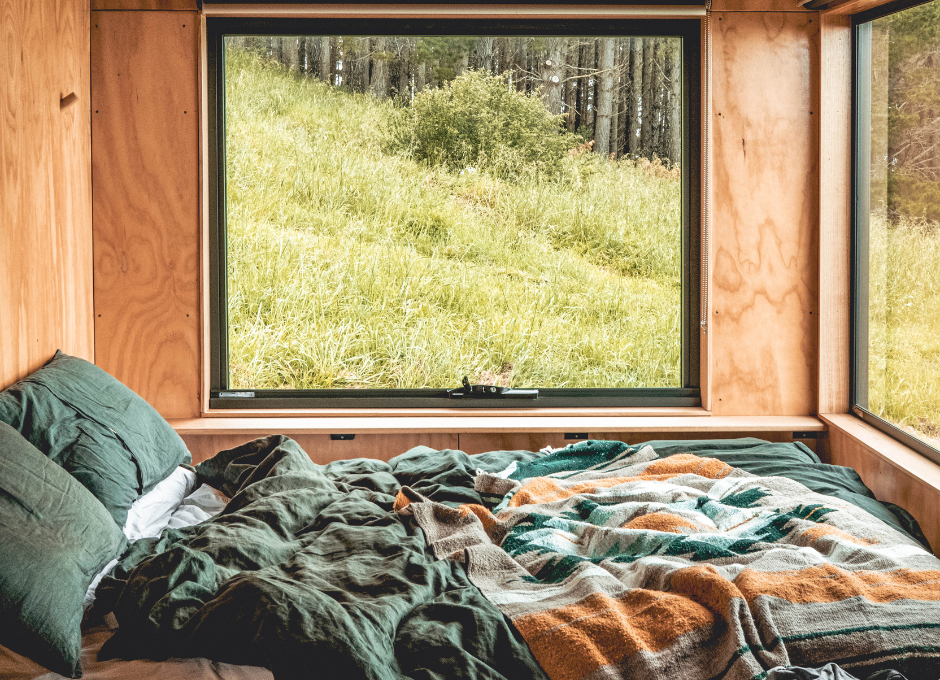
Recently my partner and I were lucky enough to check out one of Unyoked’s New Zealand cabins where the trees meet the sea at Raglan. Perched atop a hill, the cabin is surrounded by trees and overlooks the vast blue of the Tasman sea.
Inside, the cabin is simple yet functional and provides all the comforts you'd want on an escape, but most impressively it lets the surrounding natural environment do the real mahi.
I struggle from time to time with ruminating thoughts. The feeling of negative thoughts getting caught on a treadmill in your brain- going around and round. But I found, while outside, surrounded by the natural environment, that these significantly subsided. This is my own experience (n=1) so I wanted to see if the literature had examined this.
Turns out, there has been a study looking specifically at rumination; the study by Bratman et al. (2021) aimed to investigate the effects of nature exposure on affect (the underlying experience of feeling/emotion/mood) and how rumination mediates this. Unsurprisingly the study found that spending time in nature was associated with statistically significant reduced levels of rumination and improved affect.
So, using nature as a tool for mental health isn’t just something I believe in, it is scientifically proven.
Obviously, those of us who have experienced the benefits of nature strive to carve out time specifically to spend immersed in it.
But when building new healthy habits, it’s important to remember that “neurons that fire together wire together.” This means repetitive small actions can help reshape the brain and form healthy habits.
To rewire your brain, and help strengthen your “fence at the top of the hill,” I recommend having a really small action you can fall back on when you are unable to get away from the daily grind. This will help to keep those neural networks alive and allow you to benefit more when you are able to truly ‘unyoke’. The research shows that even 20 minutes in the natural environment can help decrease rumination, this can be as easy as sitting and reading in the park.
So, with the concept in mind; doing something (in nature) is always better than doing nothing- what can you do today?